I have decreased the cost of both of my eBooks to 99p. I want anybody who wants to read my books to be able to afford to – that’s a priority for me at the moment.
I’m all about demystifying indie publishing, particularly the self-publishing aspect of it (because that’s my area of expertise). I think it’s important to talk about what indie publishing is really like, so that those thinking of taking the leap know what to expect. Most of the indie-published authors you see out and about on the internet are already fairly well-known – they have a bit of a following, at least, which is why you’re seeing their names. This doesn’t happen overnight, and it doesn’t happen by default. Likely, that author has put a lot of time and effort into marketing their books, or, they’ve managed to go viral on social media. Sometimes, as an indie author, you do everything you need to do, and it doesn’t necessarily translate into sales or page reads.
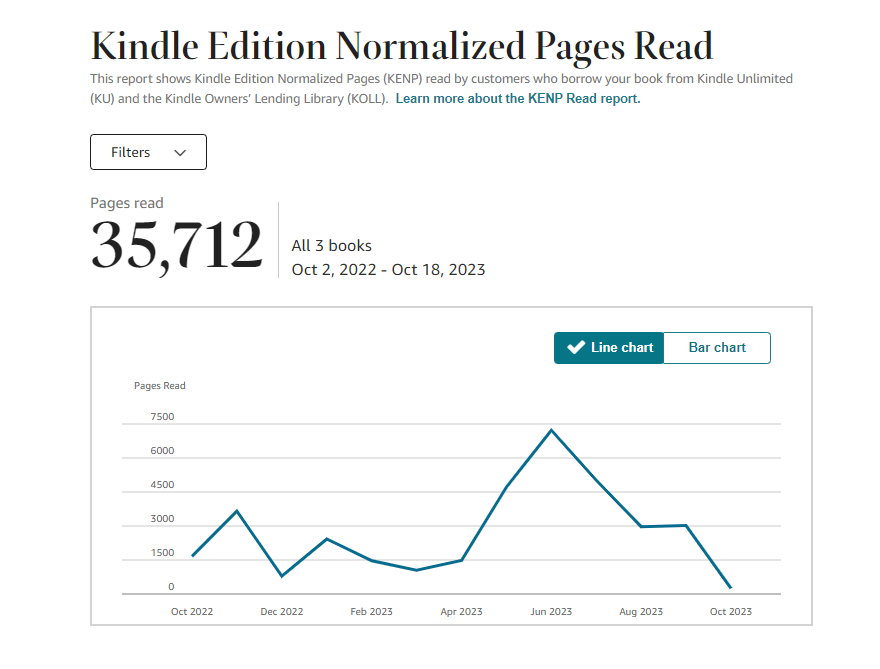
Above, is my Kindle Edition Normalised Page Reads – in other words, these are the number of pages people have read of my books through the Kindle Unlimited program. If a person has Kindle Unlimited, they have access to a ‘free’ library of books, and both of my books are included in this. In October of this year, so far, I’ve had 225 page reads, which is WAY below normal for me, as you can see. I’ve been consistent on social media, I’ve even been posting on TikTok, but my efforts haven’t paid off. What I’m trying to say, in a roundabout way, is when you’re an indie author, the work doesn’t stop after you’ve pushed the publish button. This month, if anything, I’ve been better at advertising and marketing, but things just haven’t panned out.
Being an indie author also comes with a lot of guesswork – What do the social media gods want you to do? What do the Amazon algorithms like/dislike this month? Why have my page reads plummeted to almost zero, from being fairly decent in recent months? Do I need to sell my soul to the Devil? I don’t know. Like I said… guesswork. I published my second book in April 23, which is when my page reads began to spike. The general consensus is that, as an indie author, it’s about getting as many books out there as possible (and making sure they’re pretty damn good too). Volume is key, from what I’ve heard. It’s a balancing act. Looking at my statistics, it’s very clear that something changed in September 23, but what changed is anyone’s guess. There is talk in author circles about people cancelling KU subscriptions because of the rise in the cost of KU, and also because of a decrease in author payments, which resulted in authors/publishers also leaving the program. It’s a shame because many of the books on KU are from indie authors/publishers, and this will hit them directly. I have loved KU since I joined the Darkside and bought a Kindle. However, in light of the rising cost of KU for readers, I have decreased the cost of both of my eBooks to 99p. I want anybody who wants to read my books to be able to afford to – that’s a priority for me at the moment. If you want to read a physical book, you can also reach out to your local library and ask them to buy in a copy of my books.
I’m not for a second suggesting any reader ‘owes it to me’ to read my books – quite the opposite. I’m a huge advocate of reading whatever you want to read, without feeling pressured to read certain books. The reason I’m sharing this with you is because I think there needs to be more transparency in the publishing industry as a whole. Opening an honest dialogue between indie authors, publishers, and readers can only be helpful for the continued progress of indie publishing. Indie publishing is changing the world, and the best thing about writing and publishing books is that there is space for all of us to be successful. People don’t just buy one book and call it a day. People buy multiple books a month. They can support numerous authors at once, and that’s amazing. Indie authors (particularly horror authors) tend to be absolutely fantastic at supporting other authors because they’re aware that this doesn’t detract from their own success. From talking to other authors, it seems that this downturn isn’t just impacting me which, although it makes my ego feel a little better, it’s impacting indie publishing as a whole (which sucks!). Things are up in the air at the moment, let’s all keep our fingers crossed that things won’t come crashing down to earth with a bang.

 Sarah Jules Writing
Leave a comment