
With the first self-edits of ‘You Invited It In 2’ underway, I thought I’d share my editing process with you. As a disclaimer, editing is my day job. I feel fairly confident self-editing my own work (to a point). However, I always hire a proofreader. Self-editing is not a replacement for proper, professional editing. This is what I do before I send my work off to a proofreader or editor to make sure it is ready to go.

1. Print off a hard copy of the manuscript, and get myself a coloured pen. A coloured pen helps me to see the edits clearly.

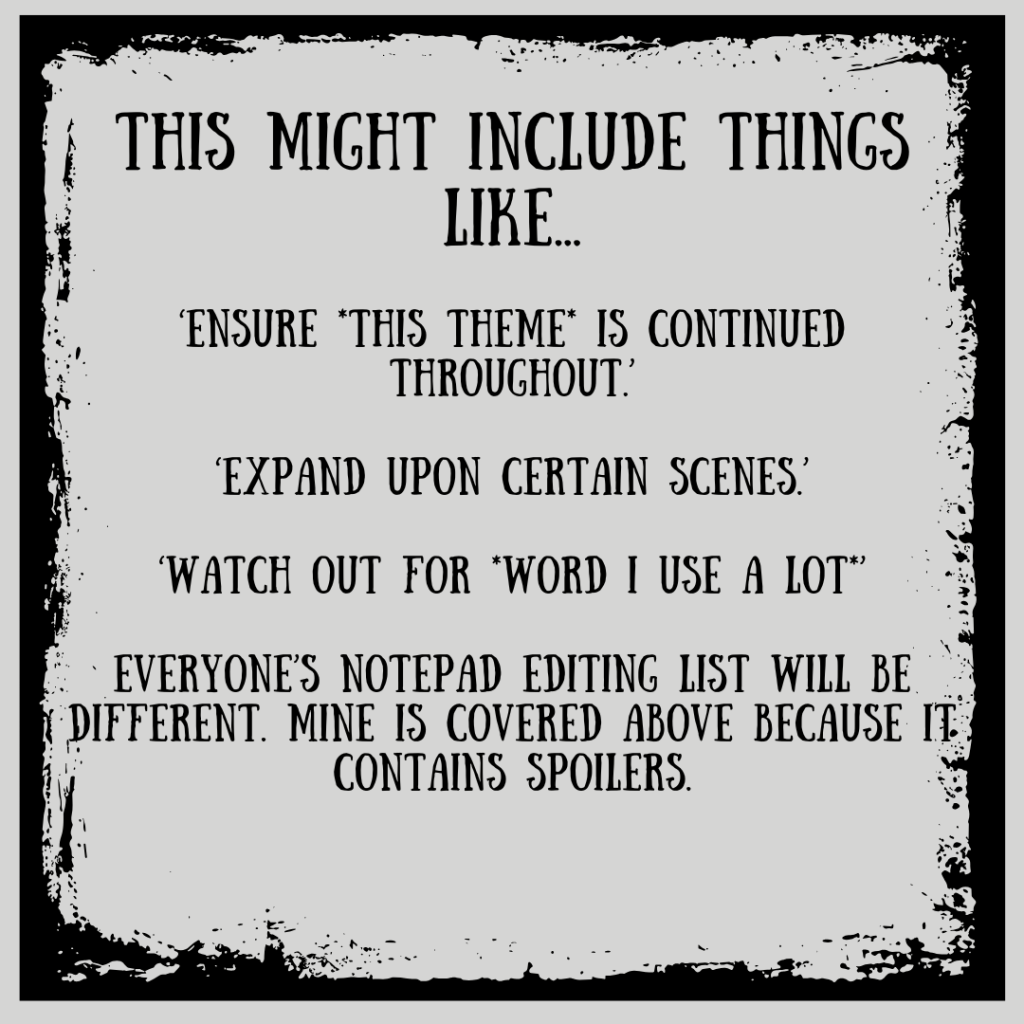
2. I have a separate notepad for editing prompts, and I keep that next to me as I read the document.
This might include things like…
‘Ensure *this theme* is continued throughout.’
‘Expand upon certain scenes.’
‘Watch out for *word I use a lot*’ Everyone’s notepad editing list will be different. Mine is covered above because it contains spoilers.


3. I do a first read of the manuscript, and scribble all over it in my red pen. I’m not editing for ‘correctness’ here. I’m focusing more on the ‘big picture stuff’.
During the first read through, I focus on…
The Plot: Is it well-paced? Are there any plot holes? Do the subplots add to the story? Is anything left unfinished?
The characters: Do they feel fleshed out and realistic? Do they add to the story? Are they memorable?
The Content: Does it read well? Is there enough description? Is it too descriptive? Is the dialogue realistic? Is the tense and POV consistent?
I’ll also fix any obviously clunky sentences or errors I see, but I’m not specifically looking for these. This is more of a ‘developmental edit’.

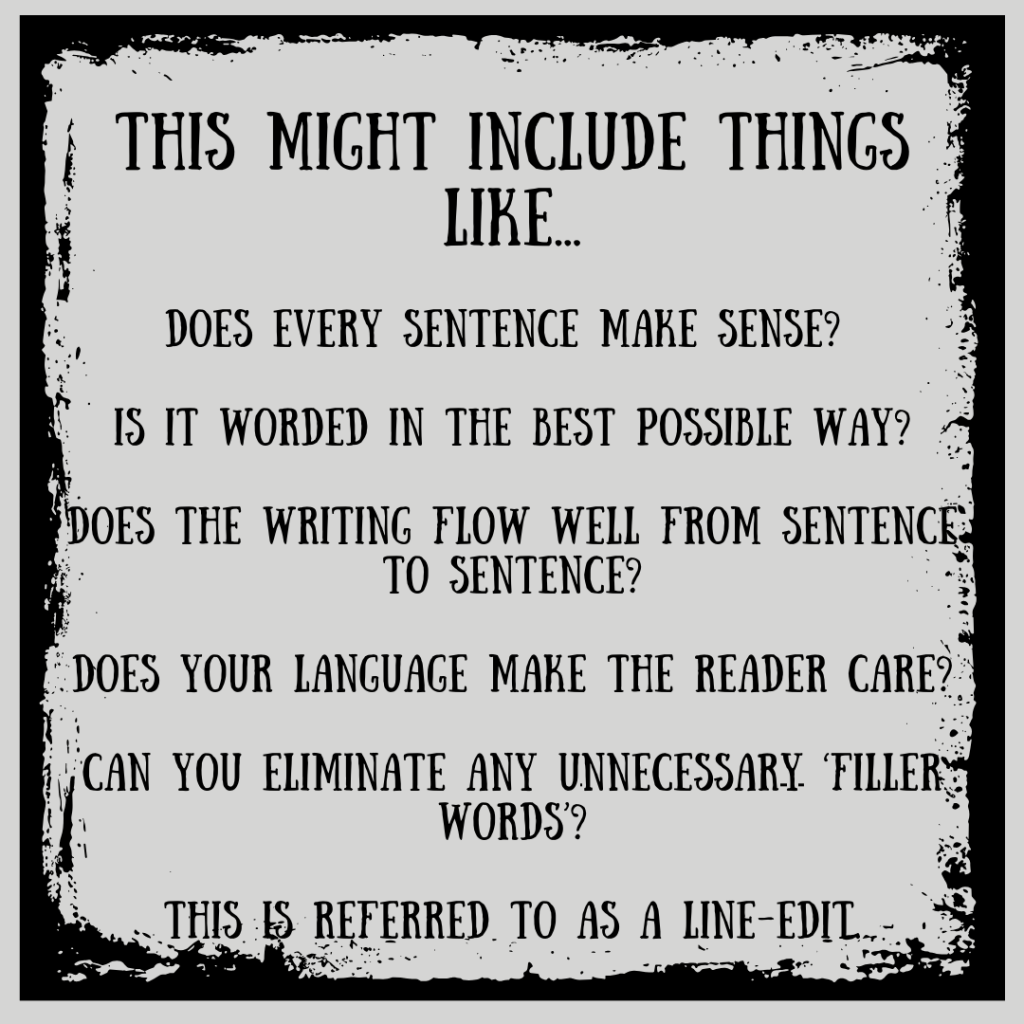
4. After fixing the edits in the document, and printing it off fresh (sorry trees!), I do a second read of the manuscript. I’m editing at a sentence level here. Is each sentence worded in the best way? Caffeine is usually required.
This might include things like…
Does every sentence make sense?
Is it worded in the best possible way?
Does the writing flow well from sentence to sentence?
Does your language make the reader care?
Can you eliminate any unnecessary ‘filler words’?
This is typically referred to as a line-edit.


5. After fixing the edits in the document, I do A third read of the manuscript on the computer and fix errors. Your computer’s proofreading programmes or Grammarly can be helpful, but they’re not infallible.
This might include things like…
This is your copy-edit, so editing for ‘correctness’.*
You’ll then look at grammar, spelling, and punctuation.
Ensure you’re consistent throughout. Does a character’s name change? Their hair colour? The way they speak?
Having your computer read the document aloud to you is a great tool here!
*It’s worth noting that not everything has to be ‘correct’. You have a unique style of writing. You have to know the rules to break them.
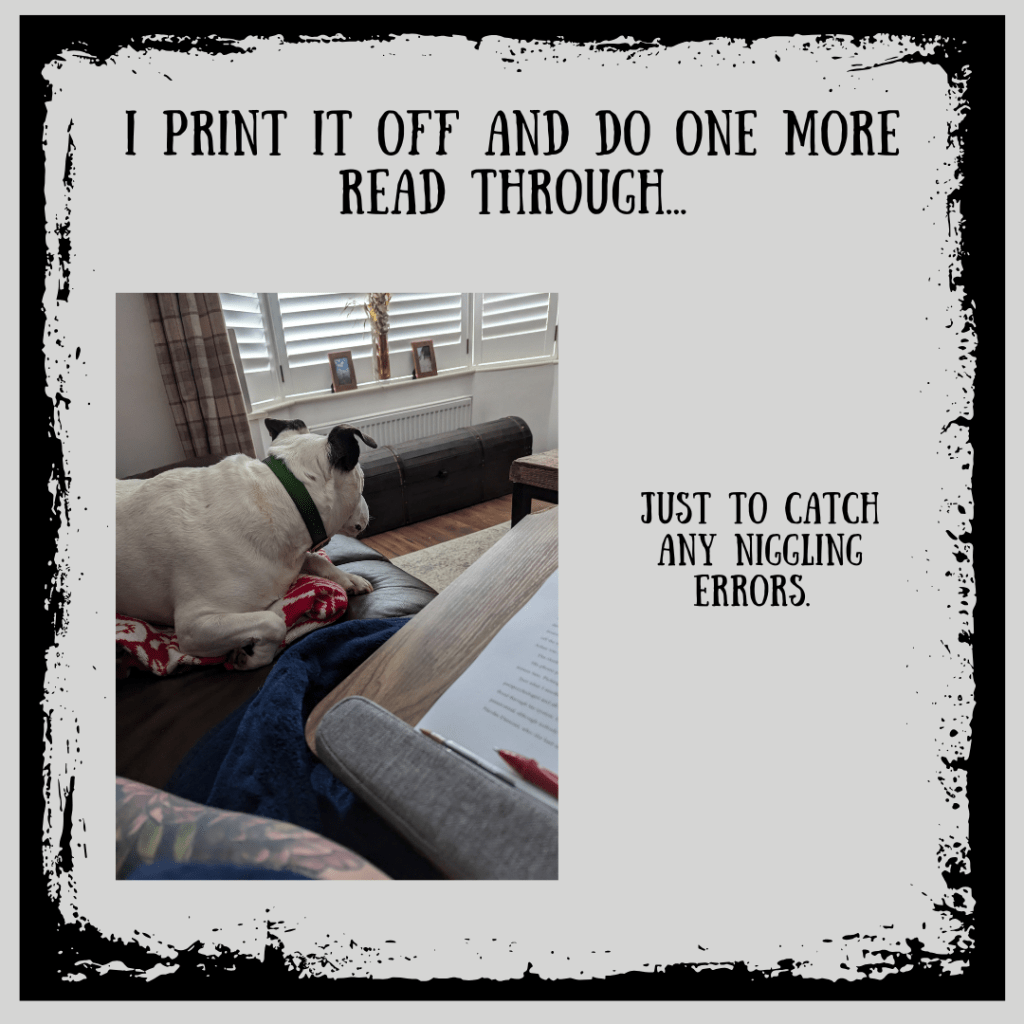

6. I print it off and do one more read through… Just to catch any niggling errors.
7. Then I send it to my beta-readers.
Using their feedback, I may choose to make more changes, but remember that reading is subjective and everyone has different tastes. You have to do what is right for your manuscript.

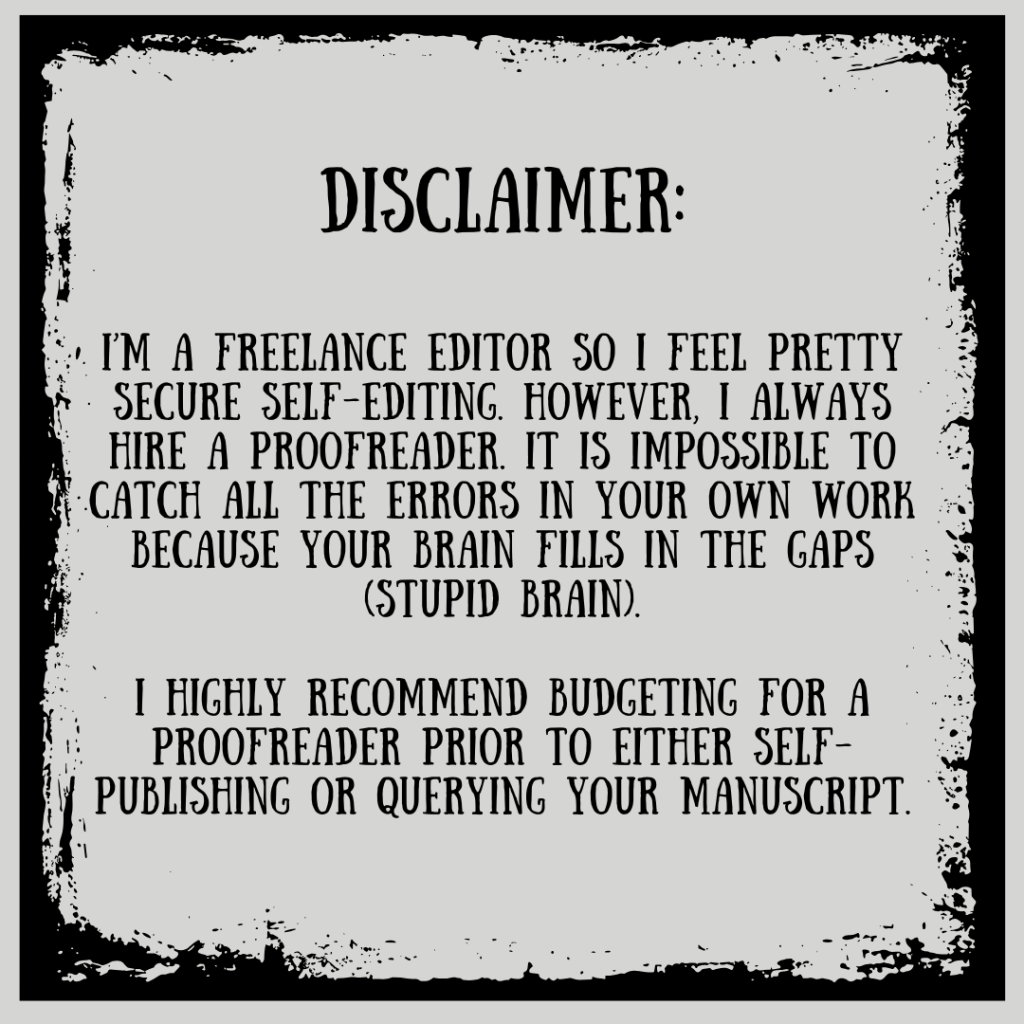
8. Then it is off to my proofreaders. You may choose to get a professional developmental edit or copy-edit prior to sending to proofreaders, depending on your needs and budget.
Again, a disclaimer: I’m a freelance editor so I feel pretty secure self-editing. However, I always hire a proofreader. It is impossible to catch all the errors in your own work because your brain fills in the gaps (stupid brain). I highly recommend budgeting for a proofreader prior to either self-publishing or querying your manuscript.
Do you self-edit? What does it look like for you?
 Sarah Jules Writing
Leave a comment